
Appearance
Chapter 2: What Are Bones Actually Made Of?
2
Here's something that might surprise you: your bones aren't dead, chalky sticks holding you up. They're alive, constantly changing, and way more interesting than you might think!
Your Bones Are Living Tissue
Seriously—your skeleton is basically an organ. It has:
- Living cells that "talk" to each other
- Its own blood supply and nerves
- The ability to sense stress and adapt
- A complete makeover every 7-10 years (your skeleton literally replaces itself!)
Meet the Bone Cells
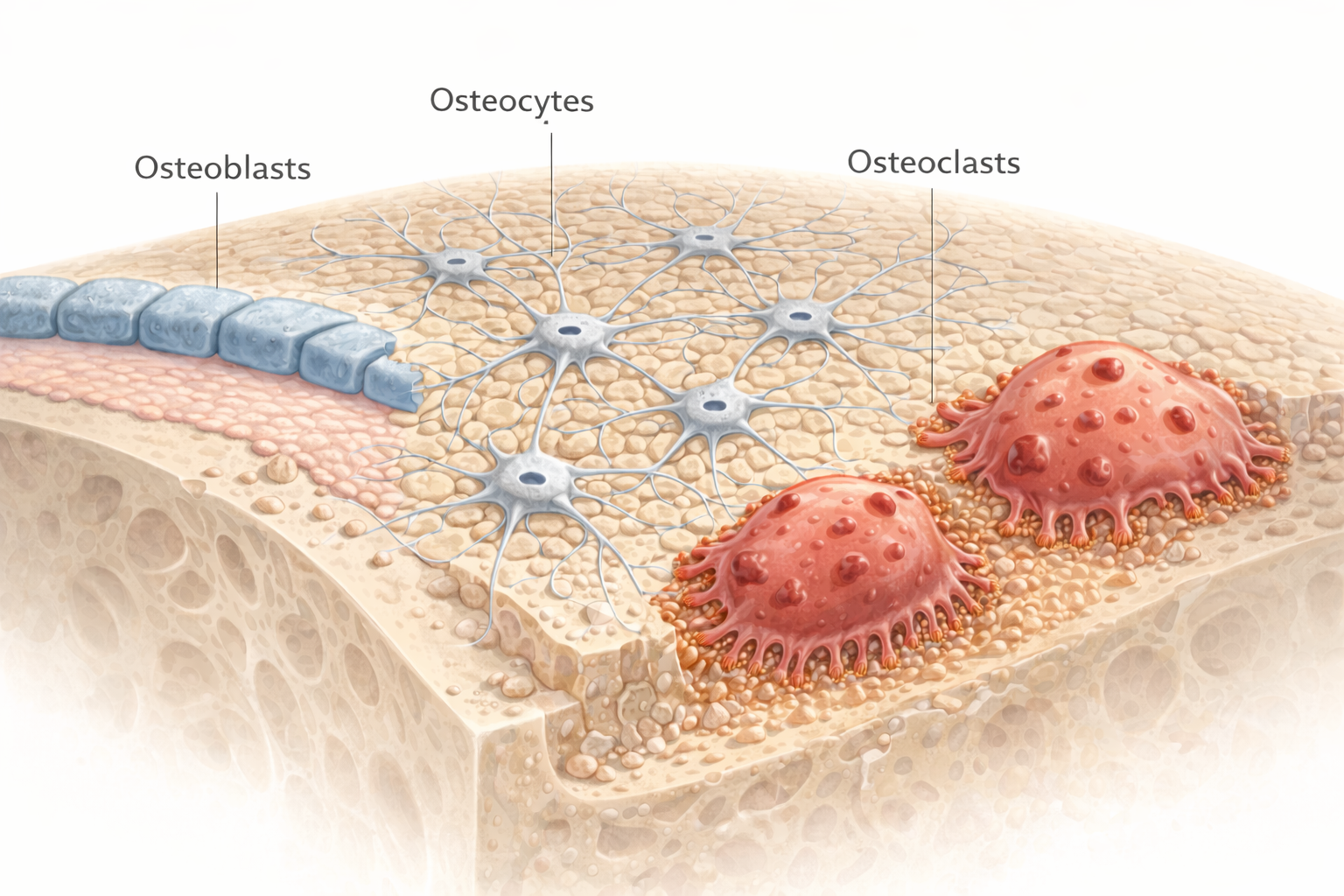
Your bones have three types of cells, each with a specific job. Think of them as a construction crew:
The Builders (Osteoblasts)
These are your bone-building cells. Their job is to:
- Lay down the framework (like pouring a foundation)
- Help minerals settle into place
- Eventually retire and become one of the other cell types
Fun fact: Osteoblasts come from the same stem cells that can become fat cells. This is partly why crash diets can hurt your bones—your body might make fat cells instead of bone builders!
The Demolition Crew (Osteoclasts)
These cells break down old bone. Sounds bad, right? But it's actually essential! They:
- Remove damaged or old bone
- Create space for new bone to form
- Release calcium into your blood when needed
Think of them like a renovation crew—sometimes you need to tear down the old before building the new.
The Managers (Osteocytes)
These are the boss cells—making up 90-95% of all bone cells! They're former builders who got trapped inside the bone they created. But they're not just sitting there:
- They sense when bone is under stress
- They send signals telling other cells where to build or remove bone
- They connect to each other through tiny tunnels, forming a communication network
What Bones Are Made Of
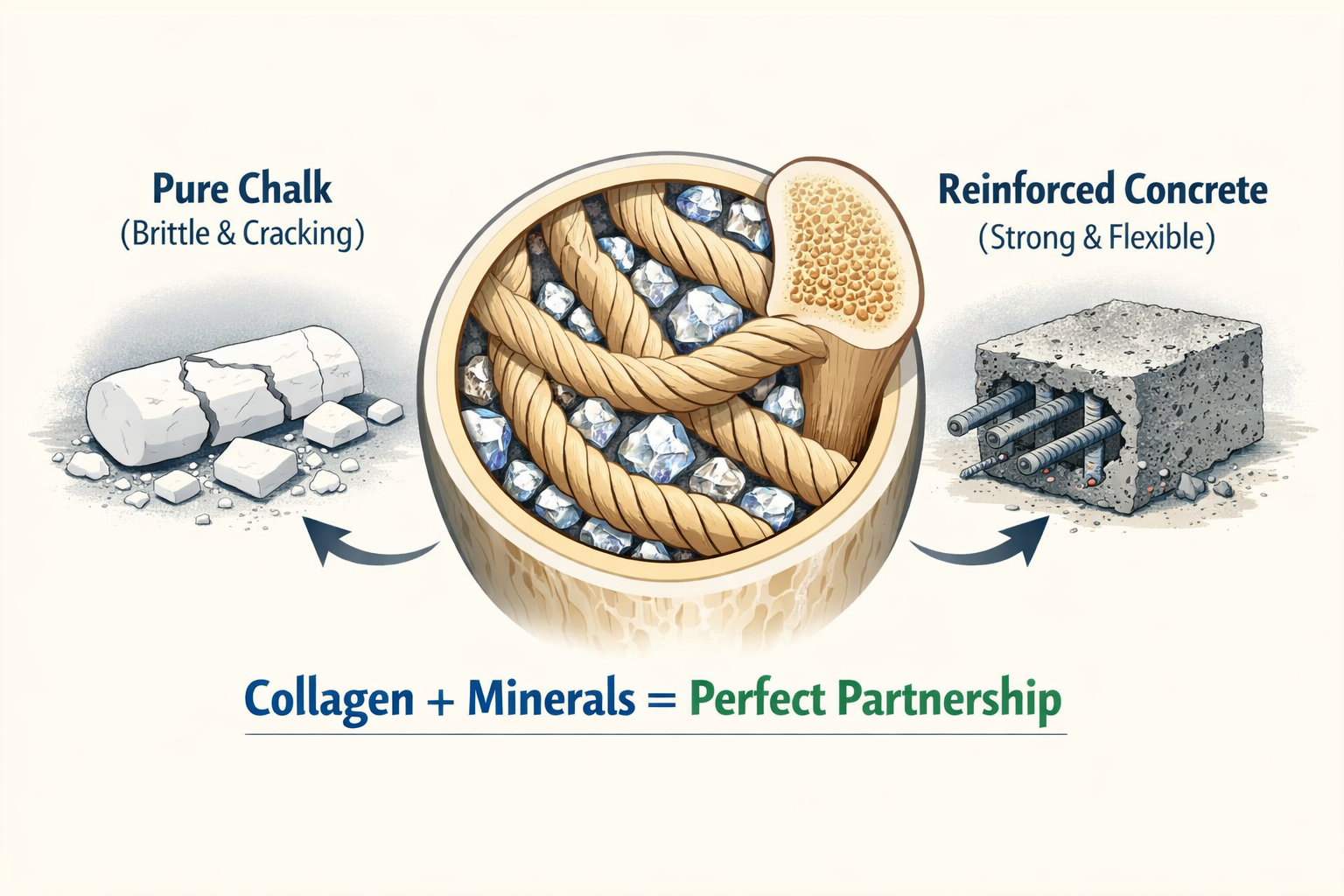
Bone is a brilliant combination of two things:
The Flexible Part (35% of bone)
- Mostly collagen—the same stuff in your skin and tendons
- Provides flexibility and shock absorption
- Without it, bones would shatter like chalk
The Hard Part (65% of bone)
- Mineral crystals (mainly calcium and phosphate)
- Provides strength and rigidity
- This is what shows up on your bone density scan
Here's the magic: these two materials work together beautifully. The collagen is like flexible rebar in concrete—it lets the bone bend slightly without breaking.
The Calcium Myth (This Is Important!)
Here's something the supplement industry doesn't want you to know: taking more calcium doesn't automatically build more bone.
Here's why: Bone building is controlled by your cells, not by how much calcium is floating around. It's like having a pile of bricks—you can't build a house just by having more bricks. You need workers (osteoblasts) to actually put them in place.
Most people eating a normal diet already have plenty of calcium in their blood. The challenge isn't usually getting more calcium—it's getting your bone cells to build effectively.
What Extra Calcium WON'T Do
- Force itself into your bones
- Speed up bone building
- Make up for other problems (like hormone issues or not exercising)
What it MIGHT do if you take too much:
- Increase risk of kidney stones (especially large doses from supplements)
- Possibly affect your heart (still being studied)
How We Track Bone Activity
Doctors can measure how actively your bones are building or breaking down using blood tests:
P1NP (building marker): When osteoblasts make collagen, they leave behind a specific fragment. Higher levels = more building activity.
CTX (breakdown marker): When osteoclasts break down bone, they release collagen fragments. Higher levels = more demolition activity.
These can help doctors see if treatments are working, even before density changes show up on a scan.
Two Types of Bone Tissue
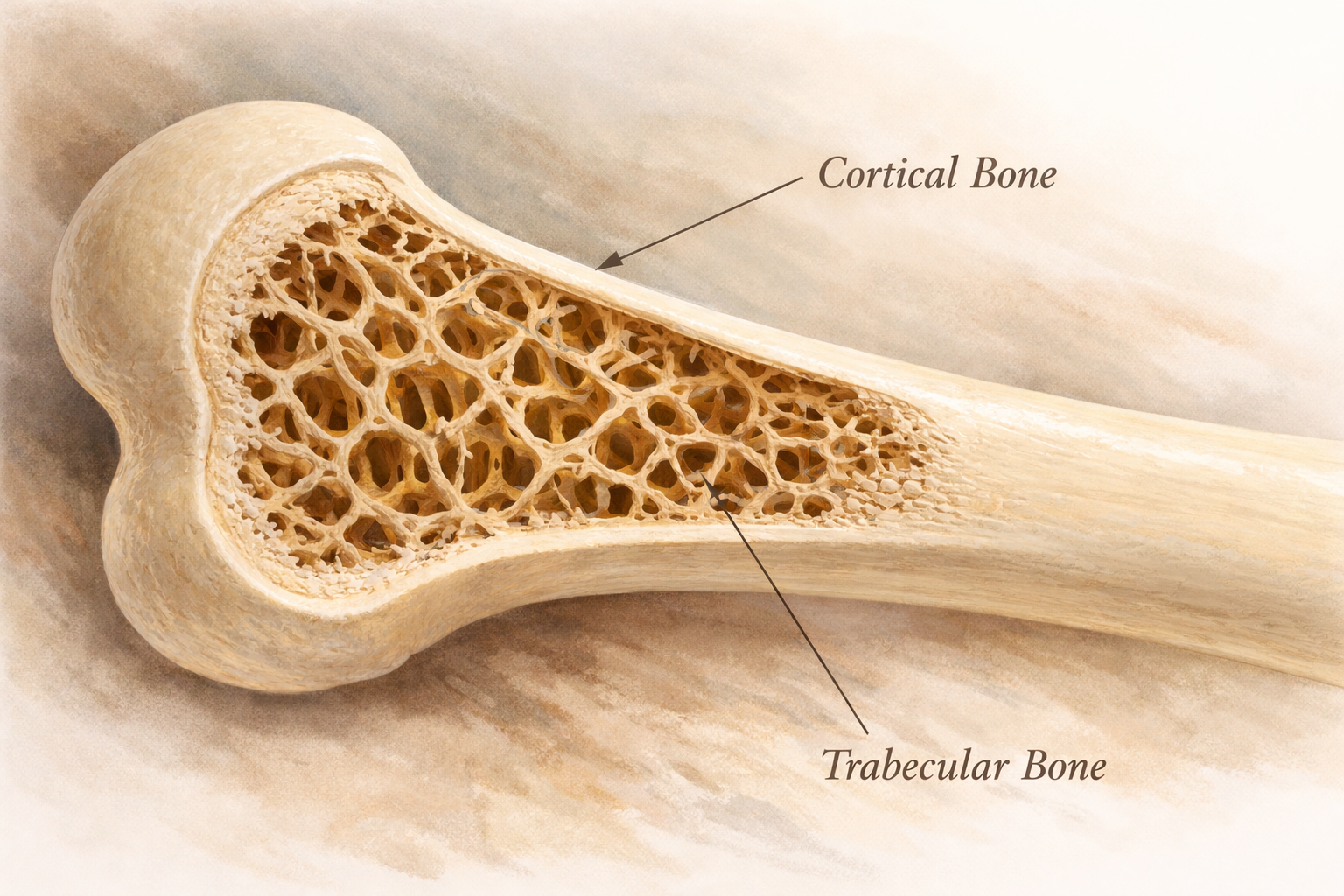
Your skeleton has two different structures:
Cortical Bone (the outer shell)
- Dense and solid
- Makes up 80% of your skeleton's weight
- Forms the hard outer layer you can feel
Trabecular Bone (the inner honeycomb)
- Looks like a sponge or honeycomb
- Lighter but still strong
- More active and changes faster
- Found mainly in your spine and the ends of long bones
The Bottom Line
Your bones are living, breathing tissue—not passive mineral storage. Building healthy bones requires active cells, not just calcium.
Key takeaways:
- Three cell types work as a team: builders, demolition crew, and managers
- Bone is a smart combo of flexible collagen and hard minerals
- Just adding calcium won't build bone—your cells have to do the work
- Blood tests can show how active your bone remodeling is
Next up: we'll explore how your body decides when to build bone and when to break it down—and the hormones that control this delicate balance.